
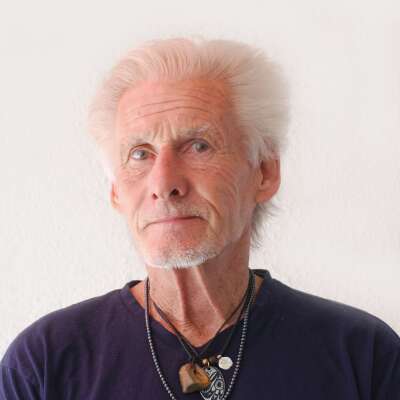
New Mexico will honor one of its most decorated athletes on May 8 with the state’s first‑ever Ross Anderson Day. Anderson who is a member of five different hall of fames, is being recognized in part for his record‑shattering 154.06‑mile per hour run that made him the fastest alpine skier in American history.
The proclamation caps a 20‑year milestone since Anderson set the all‑American speed‑skiing record and celebrates a career that broke barriers for Indigenous athletes while inspiring generations of Native youth.
A member of the Cheyenne‑Arapaho Tribe with Apache and Choctaw heritage, Anderson not only carved out a historic path in one of skiing’s most elite arenas but has spent decades giving back through youth outreach, which his newly formed Star 154 Foundation will continue.
As Albuquerque prepared to honor him with cultural performances and official recognition, Anderson reflected on the danger, determination, and purpose that shaped his journey – and the legacy he hopes will clear the way for future leaders.
“It’s definitely a big deal and a great honor to actually have something like this.” Anderson said during a phone call Wednesday. “I never thought in the world, I would actually be part of something like this.”
After a phenomenal speed skiing career, Anderson spent a decade introducing Native youth to skiing, including early outreach to the Southern Ute community while living in Durango.
With his nonprofit, Star 154 Foundation, Anderson is now expanding his work with youth and beyond to include clean water projects for Native Americans across the United States and Canada.
Speaking from his home in Albuquerque, Anderson said qualifying for the North American Championships and being the second Native American to race in the World Cup with the U.S. Ski Team were two highlights that really stood out to him. He said representing those of color was very rewarding.
Anderson began skiing at age 3, under the tutelage of his dad who worked on ski patrol and as an economics professor at Fort Lewis College in Durango. Anderson attended the University of Arizona, earning an associates degree in marketing.
Watching Worldwide Sports as a youth, Anderson said there wasn’t anybody he could relate to.
Growing up in Durango, Silverton had races that were a big thing and Anderson was encouraged to get involved by his friend Dale Womax, who competed in the 1992 Olympics when speed skiing was a demonstration sport.
Anderson raced on the Purgatory Ski Team and shared the same race shack with Womax, who saw how fast Anderson skied, suggesting he try the sport. At age 22, Anderson saw it as an opportunity to try and qualify at the professional level and “make a mark as somebody of color in the sport.”
“All I wanted to do was qualify,” he said. “I just wanted to make a presence and represent.”
An elder told him at the time, “you realize if you make this you will be .01% if you succeed” – calling it a “miracle.”
Choosing ski racing over academics, in 1993, Anderson began his drive for excellence and began training for making the U.S. Ski team.
“Well, this sport is definitely extreme,” Anderson said when discussing the most harrowing or dangerous situations he faced. He witnessed two deaths while competing. With skiers blasting down the mountain at speeds in excess of 150 mph anything can happen to any competitor, he said.
“When you’re at the World Cup level, you know, that could have been anybody,” he said, adding one “slight mistake and they’re slipping down the mountain,” which is a mile-long course.
“Gut wrenching,” he said. “You always have to have in the back of your head the extreme danger of the sport. It’s like when you get bucked off a horse: are you going to get back on it?”
Their ski suits, non-latex material, highly elastic, tightly knit synthetic fabrics (usually a blend of 85-90% polyurethane/polyester and 10-15% spandex or elastane) also creates a friction energy, he said.
In 1998, Anderson had his worst wreck in Vars, France, skiing at 131 mph. The crash resulted in third degree burns on his leg when his ski suit melted into his skin.
Anderson met with the doctor that day because he “needed to get back on the mountain. I had to plead with them to run the next day.”
Fighting through the intense pain, he raced the next day, which was at the beginning of the World Tour.
“I’m telling you that was some serious pain,” he said.
For Anderson, the mountains are a special, inspirational place to be honored with gratitude.
“One of the things I’ve always done on the day of a race is going there early in the morning and praying, at the finish line usually,” he said, thanking Mother Earth for the opportunity to be on her land.
Too often people take that for granted, he said, adding that he asks for “everyone to be watched over and be safe.”
Reflecting on his purpose in life, Anderson looked back and said when you’re a teenager you really don’t know what your’re going to be or who you’re going to be.
“Life definitely throws you some curve balls,” he said. “And where I’m at now is totally different than what I thought.”
Striving for excellence and fighting through hardships in speed ski racing taught Anderson the importance of “being humble.”
“Once you understand the magnificence of what you can do and yet stay grounded — that’s a gifted trait,” Anderson said. “You can pass it on and be the leader for the next generation.”
“Just at awe,” Anderson said was his feeling when finding out about RAD, adding that even with five hall of fame awards under his belt he certainly didn’t expect it.
“You have those feelings – this is incredible – and ask ‘is this a dream,’” he said.
“I’m going to be 55 May 8, so that’s the big deal,” Anderson chuckled, about his great honor on that special day.
His biggest goal for the Star 154 Foundation is to provide leadership for the next generation, and to insure that Indigenous people see “no barriers.”
“They need to go and follow their dreams whatever it is,” Anderson said. “I’m hoping to clear that path and make it easier for those future leaders, athletes, superstars and hall of famers.”